4 SEP 2023
Have you ever wondered what it's like to reach for the stars and explore the mysteries of the universe? For me, Josef Hanus, the ERASMUS experience has been my ticket to reaching new heights in my career and expanding the boundaries of our cosmic understanding.
I'm a dedicated young researcher at the Astronomical Institute of Charles University, and I embarked on a journey through the ERASMUS program. My mission: to deepen my expertise in the physical characterization of asteroids and to collaborate with some of the brightest minds in the field of planetary science (e.g., Javier Licandro).
During my ERASMUS experience, I had the privilege of exchanging skills and knowledge with researchers from partner institutes in Spain, Czechia, and Slovakia. These collaborations allowed me to unravel the secrets of asteroids, from determining their spin states and shapes to delving into sizes, albedos, and surface characteristics.
One of the highlights of my ERASMUS journey was my involvement in the ESO large program, which granted me access to the VLT/SPHERE instrument for disk-resolved images of asteroids. This opportunity not only expanded my research portfolio but also enriched my understanding of cutting-edge astronomical instrumentation.
My ERASMUS experience was not just about research; it was also about building long-term connections with colleagues. Through these collaborations, I not only deepened my expertise but also broadened my horizons, gaining valuable insights into different research cultures and approaches.
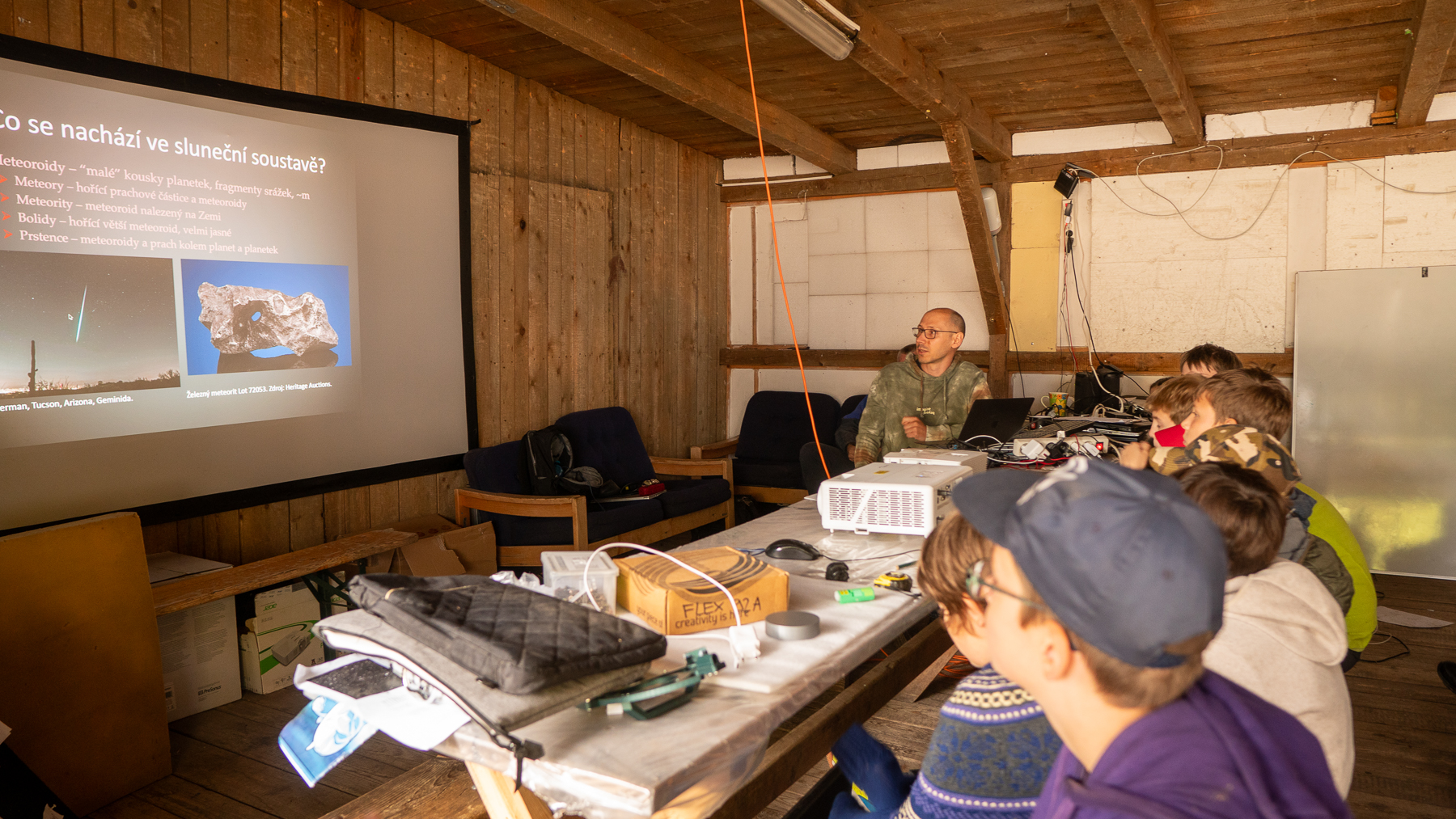
But my ERASMUS adventure didn't stop at the lab. I was committed to sharing my passion for astronomy with the public. Several public talks brought the mysteries of the asteroids closer to people from all walks of life, inspiring curiosity and fascination.
And there's more! I created, together with Franck Marchis from SETI Institute, a video guide on how to process stellar occultations by asteroids using the Tangra software. This guide is a valuable resource for citizen scientists and enthusiasts, offering step-by-step instructions on how to analyze and interpret these important events.
For me, ERASMUS was not just a program; it was a transformative journey that allowed me to reach for the stars and share the wonders of the universe with others. It was about connecting with fellow scientists, nurturing a love for astronomy in the next generation, and contributing to our collective understanding of the cosmos.
Josef Hanuš, Faculty of Mathematics and Physics of Charles University, Astronomical Institute of Charles University (AI CU), Prague